REVIEW · SAN SEBASTIAN
Private French Basque Countryside & Villages from San Sebastian
Book on Viator →Operated by Ikusnahi Tours · Bookable on Viator
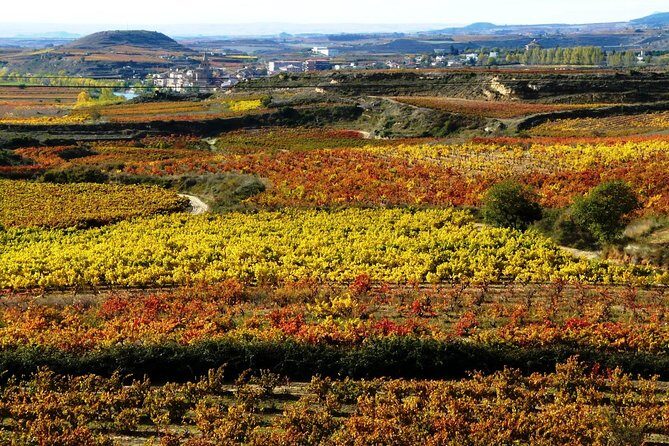
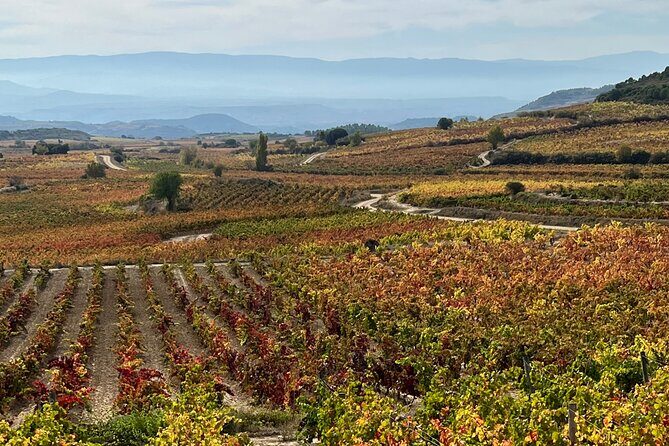
This route feels like France’s Basque postcard. You get a private day trip from San Sebastián into French Basque countryside with a local driver/guide, plus freedom to adjust the pace. I especially like the hotel pickup/drop-off, because it removes the usual stress of cross-border driving and timing.
I also like that you’re not just handed photo stops. You’ll hear the stories behind the places, from Santiago pilgrims to how peppers shaped everyday life in Espelette. One possible drawback: food and drinks aren’t generally included, so you’ll want to plan a lunch budget or confirm what you’ll taste at the restaurant stop.
This is a 9-hour-style outing (start 9:00 am) in an air-conditioned minivan, offered in English, and designed for a small private group. If you want a day that feels local rather than rushed, it’s a strong fit.
In This Review
- Key things to love about this San Sebastián–French Basque day
- A private French Basque countryside day that actually feels flexible
- Price and value: is $429.60 per person a smart buy?
- Getting there smoothly from San Sebastián: pickup, minivan, and timing
- Saint-Jean-Pied-de-Port and the Camino’s los puertos de Cize story
- Bidarray: pink stone, a porch for rain, and the River Nive leads the way
- Espelette: how a 16th-century pepper turned into Basque-French identity
- Ainhoa: church-square calm, Gregorian chants, and Indianos houses
- Why having Mikel’s kind of guide matters on a day like this
- Who should book this private Basque day (and who should think twice)
- Should you book this tour from San Sebastián?
- FAQ
- What towns will I visit on this private day trip?
- How long is the tour?
- What time does the tour start?
- Is hotel pickup and drop-off included?
- Is the tour private?
- What language is the tour offered in?
- Is transportation provided?
- Are tickets included for the stops?
- What should I bring with me?
- Is it easy to cancel if plans change?
Key things to love about this San Sebastián–French Basque day
- Camino storytelling in Saint-Jean-Pied-de-Port: learn why pilgrims once feared los puertos de Cize
- Bidarray’s pink-stone church and porch culture: see how the town’s architecture answers rainy weather
- Espelette pepper history you can taste: from 16th-century introductions to balcony drying traditions
- Ainhoa’s special village layout: cemetery headstones near the church and the frontón
- Air-conditioned door-to-door transport: less hassle, more time looking out the window
- Private flexibility: you can keep the day moving at your pace and ask questions nonstop
A private French Basque countryside day that actually feels flexible
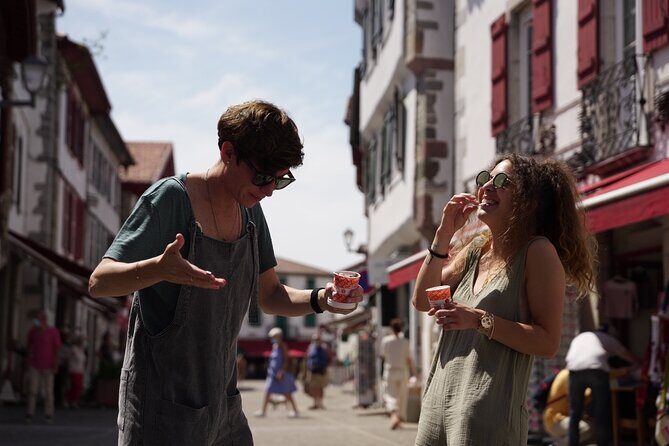
What makes this experience work is the format. You’re not squeezed into a fixed group flow with limited time at each spot. It’s a private tour, so you and your group can set the rhythm—slow down when a street pulls you in, or move on quickly when you’re short on energy. That matters on a long day with four very different towns, each with its own vibe.
You’ll also get local context along the way. A quick, well-phrased story changes everything. In the French Basque region, that context is often tied to religion, migration, and small culinary traditions that grew into something bigger. The guide’s job is to connect those dots so the places feel like they belong to the same story, not random dots on a map.
The tour is offered in English, and you’ll travel in an air-conditioned minivan. For a day crossing a border, that comfort can save your mood. You’re not spending the day white-knuckling a steering wheel, and you’re not losing time to public transport schedules.
Other French Basque coast day trips from San Sebastian
Price and value: is $429.60 per person a smart buy?
At $429.60 per person, this isn’t a cheap outing. The value comes from what you get for that money: private pacing, hotel pickup/drop-off, and round-trip transportation without you driving. Those three things add up fast, especially if you’re traveling as a pair or a small group who wants the freedom to linger.
Think of the price as paying for convenience plus guidance. Without a guide, you’d likely spend time coordinating transport, figuring out where to park, and piecing together a loose route that might not line up with the best viewing moments. Here, the day is structured to fit a tight window—about 9 hours—while still allowing you to ask questions and get stories that you’d miss if you just wandered on your own.
One practical note: the tour data clearly says food, drinks, and tickets aren’t included unless specified. Since one of the highlights is a restaurant tasting stop, ask the operator what’s actually covered. If the tasting is included, that improves the value a lot. If not, it just means you should budget for lunch to avoid surprises.
Getting there smoothly from San Sebastián: pickup, minivan, and timing
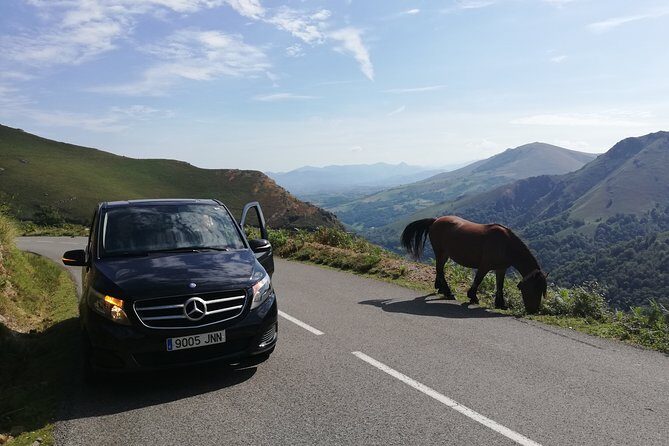
Start time is 9:00 am, which is early enough to make the most of the day but not so early that you’ll hate your alarm. The tour offers pickup from different locations if needed, though that may cost extra. If you’re staying in central San Sebastián, you can usually plan a straightforward pickup.
You’ll ride in an air-conditioned minivan. For this route, that’s a quiet comfort upgrade. The region can be rainy, and the towns you visit sit at different elevations—so having climate control helps keep the trip from turning into a long, soggy endurance test.
The stops themselves are short at each town: roughly 45 minutes for Saint-Jean-Pied-de-Port, 30 minutes for Bidarray, 1 hour 15 minutes for Espelette, and 30 minutes for Ainhoa. That rhythm is the tradeoff of a day trip. It works if you like focused sightseeing, but it’s not the choice if you want hours in a single place. You’ll see a lot of variety, not deep, slow immersion.
You’ll also get a mobile ticket, which is handy on travel days when you don’t want to chase paperwork.
Saint-Jean-Pied-de-Port and the Camino’s los puertos de Cize story
Saint-Jean-Pied-de-Port is a town with a job to do: it’s been watching pilgrims head toward Santiago for more than a thousand years. And the guide’s perspective brings that past into focus. One key detail you’ll hear is that some pilgrims got nervous about what came next in the French Camino section—los puertos de Cize. That’s the kind of context that turns a pretty medieval town into a meaningful stop.
You’ll walk the cobbled, medieval streets at an easy pace. You’ll also see the Romanesque cathedral—Romanesque style is all about heavy stone and rounded forms, so it feels grounded and old in a way that’s hard to fake with modern buildings. Add in the stone bridge over the River Nive, and the town starts to look like a natural corridor for travelers.
Then there’s the citadel, dating to the 17th century. It’s one of those details that makes you understand why people built defensible positions here. Not every village photo will explain that, but this stop helps you connect the geography with the human story.
Time matters at this stop. At about 45 minutes, you’ll want to prioritize what grabs you. If you love architecture, angle toward the cathedral and citadel. If you’re more into street atmosphere, linger along the medieval lanes and bridge views.
Bidarray: pink stone, a porch for rain, and the River Nive leads the way
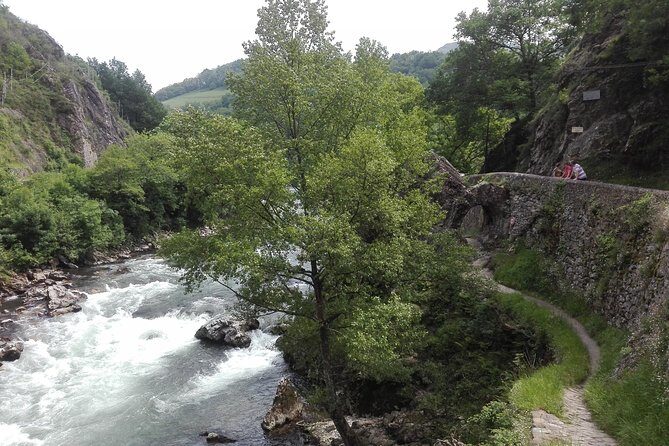
Bidarray is the quieter cousin in the set, and that’s a big part of why it’s worth the visit. You’ll follow the River Nive to reach it, which makes the route feel cohesive instead of jumpy.
The standout here is the medieval church built from pink stone. That color is distinctive, and it changes how the church reads in different light. Above all, you’ll notice the portico—the porch-like covered area. It’s not a random architectural detail. In this region, frequent rain is a fact of life, and that porch provides a protected spot where people could meet for chats before or after mass.
What I like about this stop is that it teaches you how small design choices respond to daily weather. It’s not just aesthetic. It’s practical. If you’ve ever wondered why some European towns seem to have “spaces for conversation” built right into the street plan, this is the place to understand it.
You’ll get about 30 minutes here, with admission tickets listed as free. That short timing suits Bidarray. It gives you a sensory taste of the place without dragging the day down.
Other private tours in San Sebastian



Espelette: how a 16th-century pepper turned into Basque-French identity
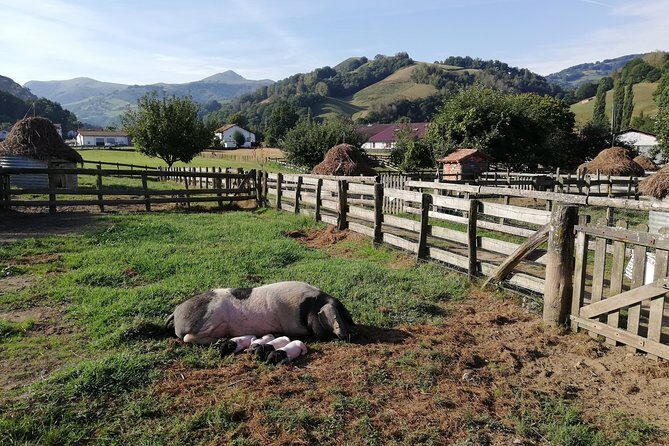
Espelette is where the day shifts from stone and streets to smell and flavor. The story starts in the 16th century, when small peppers were brought from South America. The climate around Espelette was ideal for cultivation, and over time those peppers became part of local cuisine.
This isn’t just trivia. The pepper became a practical substitute for spices that had to be bought from elsewhere, like paprika and black pepper. In other words: food choices were shaped by supply chains. That makes Espelette’s culinary identity feel real, not costume-deep.
You’ll also learn why you see so many pepper connections in town life. As the tradition grew, balconies turned into makeshift drying rooms for the chilis. That’s the kind of visual detail that makes your photos mean more, because now you know what you’re actually looking at.
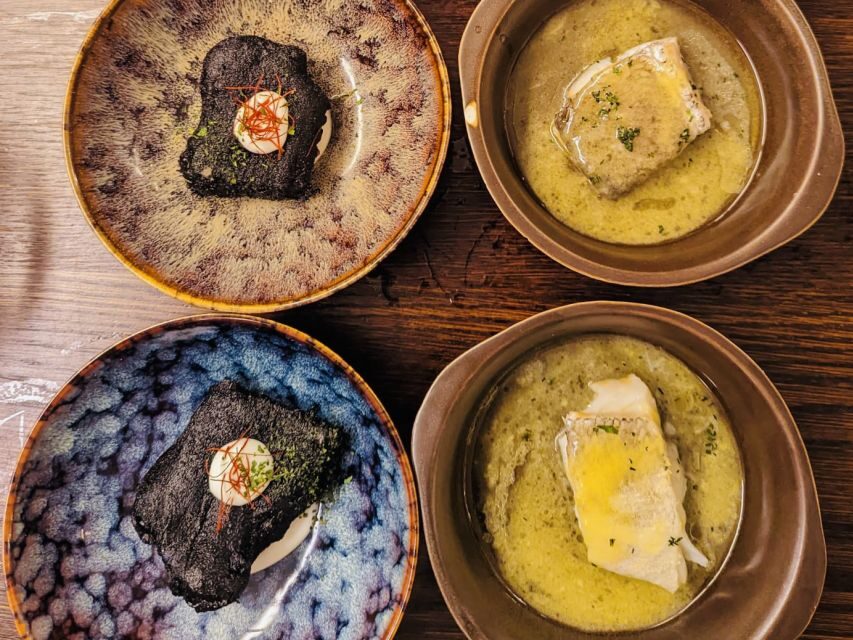
At Espelette, you’ll go to a restaurant—family-owned and operated for five generations since the 17th century. The point is to taste French specialties and understand why the Espelette pepper is treated with such reverence. In my view, this is the best way to end a countryside loop: you’re not just looking at history, you’re tasting the results of it.
Because food isn’t clearly listed under included items, treat this as a “confirm what’s covered” moment. Ask whether the tasting is included in what you pay. Either way, this stop is the one where you’ll most want to have an appetite.
Ainhoa: church-square calm, Gregorian chants, and Indianos houses
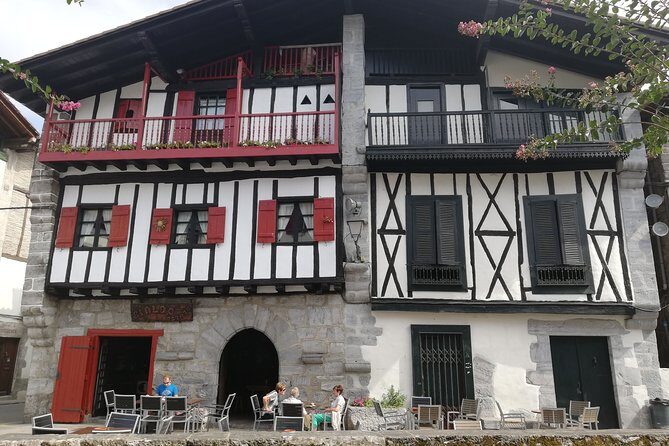
Ainhoa brings a different kind of beauty—clean, quiet, and relaxed. Even with a short stop (about 30 minutes), it’s memorable because the village layout is so distinctive.
The church area is the heart of the town. You’ll see the church of Nuestra Señora de la Asunción and—if timing lines up—the Gregorian chants. It’s one of those details that can make a small square feel like a live, slow-moving scene rather than a quick photo stop.
A striking feature: the cemetery headstones are located right in the center, near the church. It’s unusual to see burial sites integrated so openly into the village center, and it changes how you read the space. Instead of pushing death out to the edges, Ainhoa keeps it close. That tells you something about local values and the closeness of community life.
You’ll also spot the town’s frontón, which fits the Basque sports culture. And don’t miss the houses built by los Indianos—Basque emigrants who made fortunes in the Americas in the 18th and 19th centuries and returned to the village. Their homes often look more formal or grand than what you’d expect, and it’s a clue to the economic history hiding behind the calm streets.
If you like villages where the details reward slowing down, this is the stop to do it. Even with limited time, you can make Ainhoa feel like it’s yours by choosing a single street and wandering a bit.
Why having Mikel’s kind of guide matters on a day like this
A day like this can go two ways. Either it becomes a checklist—drive, stop, snap, drive—or it becomes a story you understand. The difference is the guide.
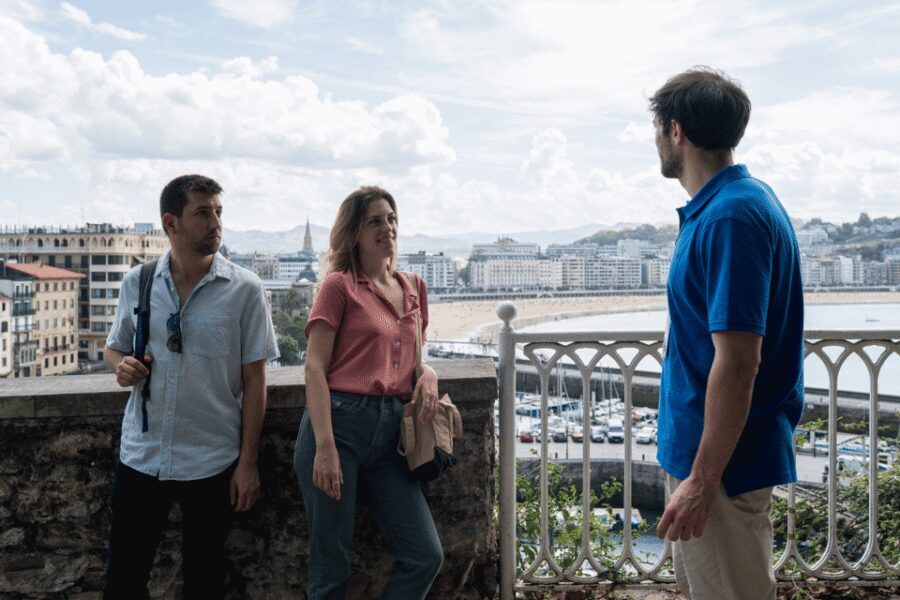
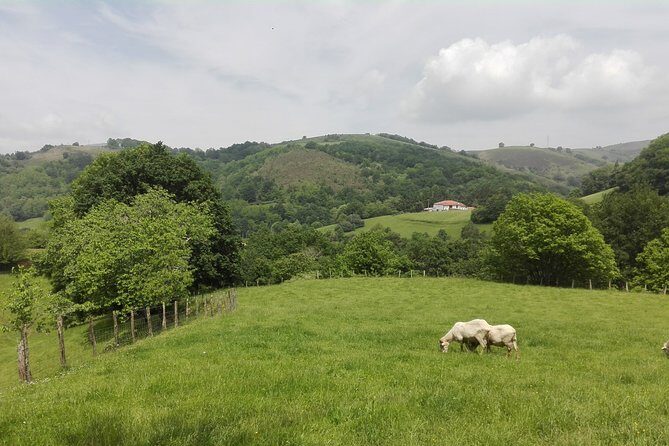
On this tour, the guide quality stands out in a practical way. Mikel is described as pleasant to spend time with and full of real knowledge about the region. More than that, he’s attentive to routes you might not find yourself, showing beautiful country roads between towns. That’s not just scenic; it’s time saved, because you’re not spending your energy trying to figure out which turns are worth it.
Guides also help you ask better questions. You’ll hear background on pilgrims, the Camino’s toughest reputation points, and the regional logic behind architecture like Bidarray’s porch. With those answers in your head, every stop gets easier to read.
If you want a tour where you walk away with real context—without turning the day into a lecture—this guide-led format is a strong match.
Who should book this private Basque day (and who should think twice)
This tour is a great fit if you:
- want private comfort and the sanity of hotel pickup/drop-off
- enjoy medieval towns but also want the story behind them
- care about food culture and want to connect peppers to daily life
- like guided road sections, not just city centers
It may be less ideal if you:
- need a lot of free time in one town to relax and slow-walk
- hate budgeting for meals, since food and drinks aren’t generally included
- prefer a lighter schedule with fewer towns and longer stays
Also, because the day is built for about 9 hours, it’s good to plan your energy like a pro. Bring a layer for changing weather. And if you’re the type who takes photos continuously, pick a few “must-capture” angles so you don’t run out of time.
Should you book this tour from San Sebastián?
Book it if you want a compact, well-guided taste of the French Basque region with less logistics stress than DIY planning. The combination of medieval pilgrimage context, pepper-driven culture in Espelette, and the calm, distinctive village feel of Ainhoa is a very satisfying spread for one day.
I’d say book it especially if you value guidance and you like road time that connects places smoothly. The private setup and local storytelling make it feel more meaningful than the common big-sights circuit.
Before you confirm, do two quick checks:
- ask whether the restaurant tasting in Espelette is included or paid separately
- confirm where pickup works best for your exact hotel location (pickup from different locations may cost extra)
If those boxes are clear, this is a solid, high-value day trip for travelers who like real places with real reasons.
FAQ
What towns will I visit on this private day trip?
You’ll visit Saint-Jean-Pied-de-Port, Bidarray, Espelette, and Ainhoa.
How long is the tour?
The duration is about 9 hours.
What time does the tour start?
The start time is 9:00 am.
Is hotel pickup and drop-off included?
Yes. Hotel pickup and drop-off are included. Pickup from different locations is possible for an extra charge.
Is the tour private?
Yes. It’s private, and only your group participates.
What language is the tour offered in?
The tour is offered in English.
Is transportation provided?
Yes. You’ll travel by air-conditioned minivan.
Are tickets included for the stops?
Admission tickets are listed as free for the stops. Food and drinks are not included unless specified.
What should I bring with me?
Carry your passport or your European Union ID.
Is it easy to cancel if plans change?
Free cancellation is offered. You can cancel up to 24 hours in advance for a full refund.