REVIEW · SAN SEBASTIAN
Zarautz, Getaria and Zumaia from San Sebastian
Book on GetYourGuide →Operated by Local Experts Tours · Bookable on GetYourGuide
Four hours, three coast towns, one story. This small-group coast run strings together Talai Mendi viewpoints, Zumaia flysch cliffs, and a movie-famous stop, so you get variety without feeling like you only pass by. What I like most is how the guide ties sea life, harbor history, and geology into one easy route; the one drawback is that the timing can feel a little tight if you want to linger for a long sit-down break.
I also like the human scale here: a max group of 8 keeps questions coming, and there’s a private option if you want more control over pace. In the field, guides such as Paul Garcia, Diego, Anna, and Andrea are repeatedly praised for keeping things lively and adapting to your interests, which matters a lot on a short 4-hour schedule.
At about $65 per person, you’re paying for guided time plus private transport with AC, not just sightseeing. Lunch isn’t included, rain gear isn’t included, and the meeting point is specific (more on that below), so you’ll want to plan for snacks and sky-checking.
In This Review
- Key things you’ll notice right away
- Why this four-hour Basque coast plan works
- Meeting up in Donostia: the cafeteria door detail
- Talai Mendi viewpoint: the coast revealed before you go down
- Zarautz: surfing town promenade and guided seaside time
- Getaria: Balenciaga roots, arrantzales heritage, and txakoli
- Zumaia: Itzurun Beach and flysch cliffs as a natural classroom
- The San Telmo hermitage: the cinematic finale in real stone
- Food and taste moments: how to plan without lunch
- Small group vs private: who this fits best
- Price and value: what $65 buys you (and what it doesn’t)
- What I’d do to get the most out of it
- Should you book this Zarautz–Getaria–Zumaia tour?
- FAQ
- How long is the Zarautz, Getaria and Zumaia tour?
- What group size is it?
- Do you provide pickup from my hotel?
- What languages are the guides?
- Is lunch included?
- Where do I meet the tour?
- What should I bring for weather?
- What if the tour can’t run due to low bookings?
Key things you’ll notice right away
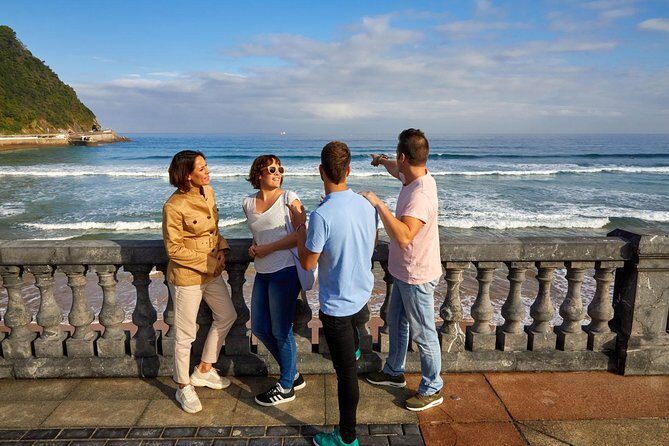
- Talai Mendi first: a big viewpoint before you start dropping toward the coast towns
- Zarautz promenade feel: surfing energy and a guided walk through a classic seaside scene
- Getaria’s harbor story: arrantzales heritage, whaling legacy, and txakoli culture
- Zumaia’s Itzurun Beach: plus the famous flysch cliffs that look like layered pages
- San Telmo hermitage with film links: a cinematic finale connected to Ocho apellidos vascos
- Guides who keep it moving with purpose: helpful stop selection and pintxo/taste guidance
Why this four-hour Basque coast plan works
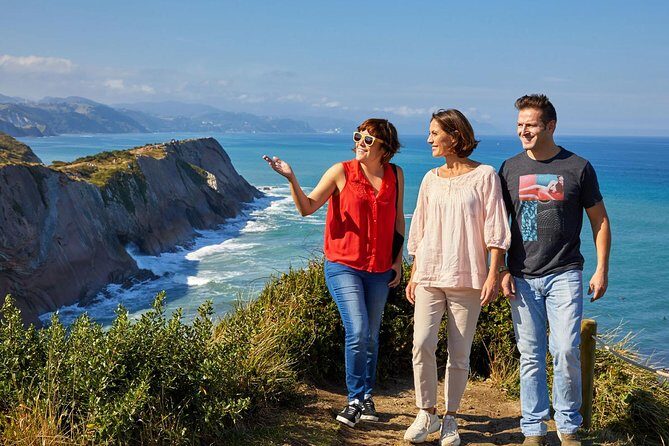
This is the kind of trip that’s made for first-timers in San Sebastián. You get a west-coast loop along Gipuzkoa, but the stops aren’t random. Each one answers a different question: where do the views come from, what makes the towns tick, and why do these cliffs matter.
The value is not only the sights. It’s the pacing plus context. On a short half day, a good guide prevents that common problem where you see a place and still feel like you missed the point. Here, the guide connects what you’re seeing—sea, fishing tradition, and rock layers—so your photos have meaning, not just pretty backgrounds.
The tradeoff is simple: with limited hours, you can’t expect long hangs. If you want unhurried strolling, you’ll need to plan on doing the heavier exploring back in Donostia or on another day. If you want a tight hit of Basque coastal culture, this is built for you.
Other Getaria and Zumaia day trips from San Sebastian


Meeting up in Donostia: the cafeteria door detail
This tour has a straightforward meeting setup, but it’s also easy to misread if you rush. The meeting point is the main door of the cafeteria, and there is only one. That sounds simple until you’re standing outside a building that has multiple entrances in your mind.
If you’re doing a pickup option, the guide will hold a lanyard with the company name Local Experts Tours. That’s helpful when you’re trying to match a person to a name quickly. My practical tip: arrive a bit early, and if you’re unsure, check that you’re at the main cafeteria entrance, not a side door or an underground entry.
Talai Mendi viewpoint: the coast revealed before you go down
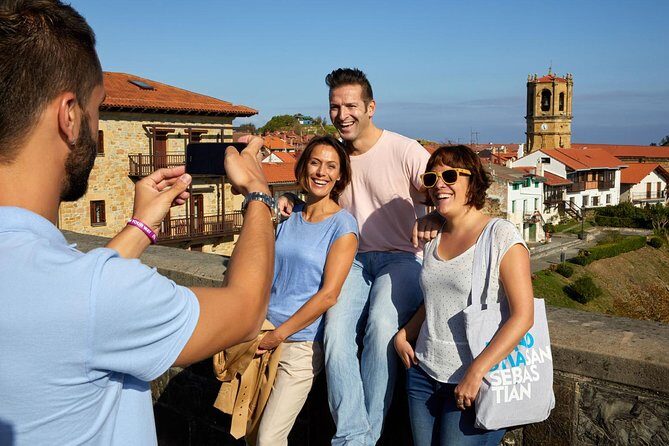
You start with views over mt. Talai Mendi before you descend toward the shoreline. That timing is smart. From up high, the coast makes sense: the shape of the land, the direction of the coastline, and why these towns feel connected even though they’re distinct.
Think of this viewpoint as the trip’s “orientation page.” Once you’ve seen the big picture, everything later clicks faster—Zarautz feels like the seaside town it is, Getaria reads like a working harbor community, and Zumaia’s dramatic cliffs don’t feel random. You’ll understand the geography that the camera can’t fully explain on its own.
The only practical consideration: it’s a viewpoint, so dress for cooler air or wind depending on the season. And if it’s raining, bring something that works fast—rain clothes and umbrellas aren’t included.
Zarautz: surfing town promenade and guided seaside time
After the viewpoint, you head down to Zarautz, a stately seaside place with that Atlantic pulse right in front of you. The guided time here is about an hour, long enough for a proper walk with context, but short enough that you still keep momentum.
What I like about Zarautz on this route is how it’s a transition. You’re moving from high-ground overview into a human-scale beachfront scene. This is where you can quickly get a feel for the Basque coast vibe: open sea, promenade life, and the kind of rhythm that feels built around weather and waves.
What you should watch for: if you’re craving a long coffee stop, you may feel the schedule pinch. Some guides do well at pointing you toward quick snack moments, but the overall plan is designed as a compact circuit, not a slow beach day.
Getaria: Balenciaga roots, arrantzales heritage, and txakoli
Next comes Getaria, and it’s not just a pretty harbor stop. It connects culture, design, and working-sea history in a way that’s easy to remember after you leave.
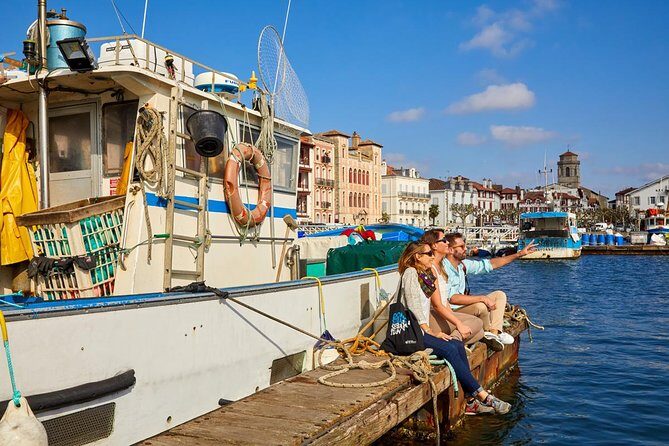
Here you’ll hear about Getaria as the cradle of designer Cristóbal Balenciaga. That alone gives the town an identity beyond fishing. But the heart of Getaria is the harbor story: the arrantzales (fishing communities) and the whaling legacy that shaped life and labor here.
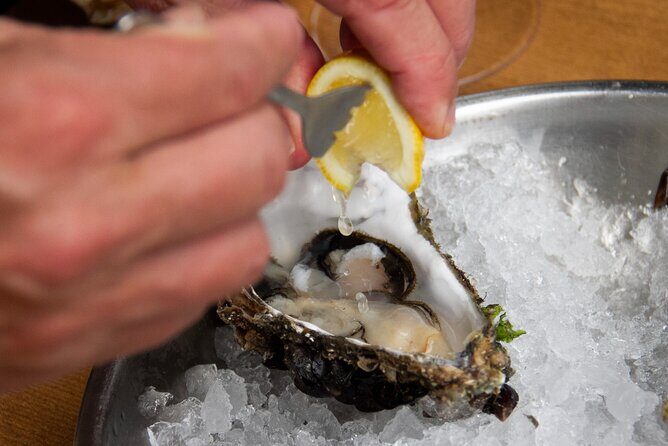
You also get the practical side of place—what you see and what you smell near the water. The harbor and the Calle Mayor help you picture daily life, and there are smoky-grill food vibes that match the coastal tradition. Then there’s txakoli, the local white wine that fits this region like a handshake. If you like tasting a region rather than just collecting views, Getaria is often the most satisfying stop.
The drawback to keep in mind: with about an hour guided time, you’ll likely want to save any shopping for quick moments. If you’re the kind of person who loves browsing side streets for 30–40 minutes, build a little extra time back in San Sebastián or pair this with another independent visit.



Zumaia: Itzurun Beach and flysch cliffs as a natural classroom
Zumaia is where the geology steals the show. You arrive facing Itzurun Beach and the Zumaia flysch cliffs—layered rock formations that look almost arranged, like pages stacked in stone.
Even in a short guided slot (about 30 minutes), you can understand why people call it an open-air classroom. The cliffs don’t just look dramatic; they explain time. The layers give you a way to visualize geology that’s hard to grasp from books alone, and your guide can point out what makes the formation special.
Why this stop matters for your overall trip: it turns the tour from town-and-sea into something deeper. If you only cared about pretty coast photos, you’d still enjoy Zumaia. But if you like learning how places work, the flysch is the kind of stop you carry home in your memory.
Practical tip: Itzurun Beach can be windy or cool, and you’ll feel it more than you expect. Wear layers. And if the weather is changeable, bring gear that dries fast.
The San Telmo hermitage: the cinematic finale in real stone
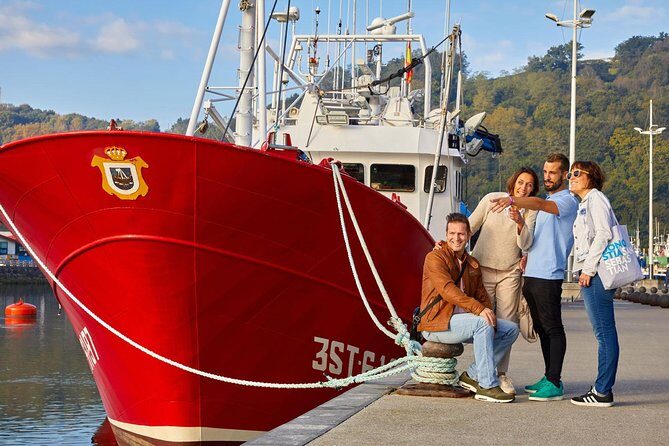
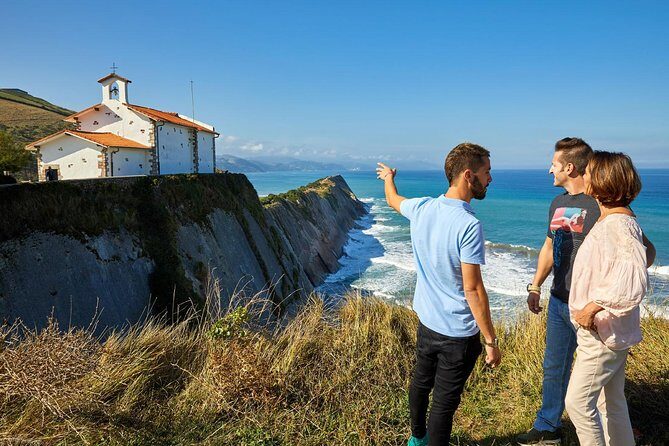
The tour doesn’t treat Zumaia like a photo-only mission. It adds a cultural anchor with the Hermitage of San Telmo, a setting connected to Ocho apellidos vascos. That film link gives you a fun way to revisit the landscape in your head once the day is over.
What I like about adding San Telmo here is pacing. You’ve just seen the raw power of sea and cliffs, and then you shift to a human-made spiritual landmark with a story you can recognize. It helps the tour feel like an arc, not a checklist.
Because this is a half-day experience, you won’t get a long sit-and-stare moment. Still, it’s a memorable kind of stop: one that you can connect to pop culture, local identity, and real place all at once.
Food and taste moments: how to plan without lunch
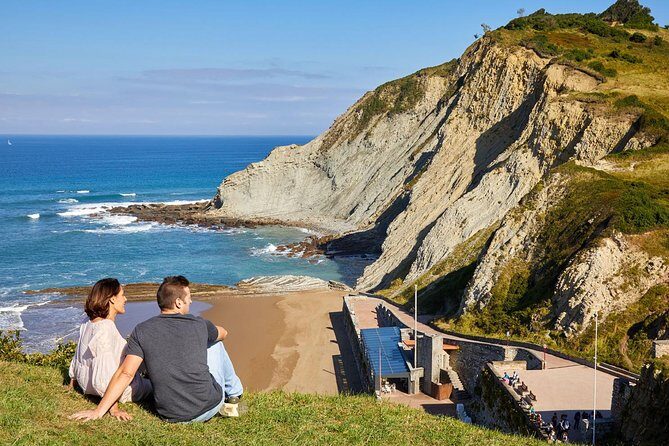
Lunch isn’t included, so you’ll want a light strategy. Since this is only 4 hours, the goal is not a full meal. It’s tasting the region at a pace that fits the route.
In Getaria, txakoli is a natural target, and the coastal food atmosphere makes pintxos feel relevant rather than forced. The guide can offer recommendations along the way, so ask what’s best for the time you have—quick bites beat long plates on this schedule.
Also, build in a simple snack backup. Bring something small from Donostia or plan to grab something before/after the tour. That way, if a stop runs tight, you’re not starving or rushing.
Small group vs private: who this fits best
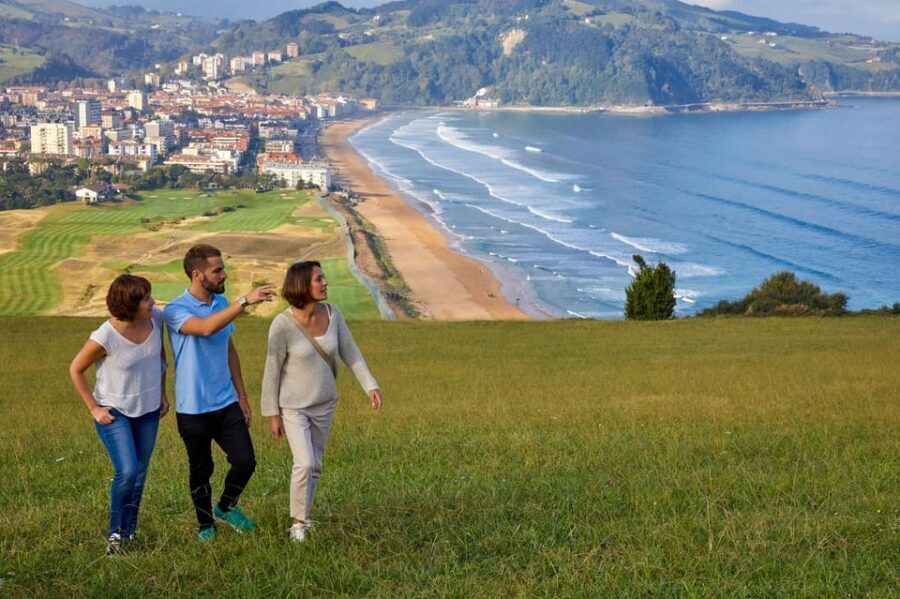
This tour runs with a small group, up to 8 people max, which usually keeps it friendly and question-friendly. If you’re traveling solo, the tour welcomes you (with availability), and the group size helps you feel less like you’re tagging along.
If you’re with a partner, family, or a small group of friends who want control, the private option can be a good upgrade. Private transport plus a dedicated guide often means better flexibility with timing and photo moments.
Who it suits best:
- First-time visitors who want a west-coast feel fast
- People who like guided storytelling more than independent wandering
- Anyone interested in Basque culture plus a bit of film crossover
Who should be cautious:
- If you need lots of free time at each stop, the itinerary length may feel rushed
- If you want a full lunch break, you’ll likely prefer an all-day alternative
Price and value: what $65 buys you (and what it doesn’t)
At around $65 per person, you’re paying for:
- local guiding
- private vehicle transport with AC
- a structured route with stops at viewpoint, town, and flysch/cliff areas
What’s not included: lunch, and rain clothes/umbrellas. That’s not a dealbreaker, but you should budget for snacks and weather gear.
The real value question is whether you want guidance. If you’re the type who likes to understand what you’re looking at, the guide time is where this tour justifies itself. If you’d rather rely on your own map and read signs at your own speed, you might not use the guided portion as well.
On balance, this price makes sense for a half-day when you want a lot of variety—promenade town energy, harbor heritage, and the flysch geology—without the stress of driving and parking.
What I’d do to get the most out of it
Here’s how you can make this feel un-rushed even though the schedule is compact:
- Dress in layers for wind and sea air, especially by Itzurun Beach.
- Plan for snacks, since lunch isn’t included.
- Ask your guide for “the fastest worth-it bite” and then take the rest of your time back on your own.
- Bring your camera, but also take a few minutes to look without it. Flysch layers are easier to understand when you’re not constantly framing.
The guides behind this trip are known for energy and clear explanations, and that’s a big reason this format works. When your guide knows how to pace the story, even 30 minutes at Zumaia can feel like more than a quick stop.
Should you book this Zarautz–Getaria–Zumaia tour?
I’d book it if you want a high-impact Basque coast day that mixes town life, maritime tradition, and geology in one short circuit. It’s especially attractive if you’re staying in San Sebastián and want a practical way to see more of Gipuzkoa without planning logistics yourself.
Skip it or consider a different option if you hate rushing and you’d rather spend long hours at fewer places. This one is built for structure. When the day goes smoothly, you’ll leave with strong memories: Talai Mendi views, Getaria’s harbor story with txakoli culture, and Zumaia’s flysch plus a film-linked finale at San Telmo.
If your priorities are understanding and variety over linger-time, this half day is a solid pick.
FAQ
How long is the Zarautz, Getaria and Zumaia tour?
The total duration is 4 hours.
What group size is it?
It’s a small group tour with a maximum of 8 people. A private option is also available.
Do you provide pickup from my hotel?
Pickup is optional. If you want it, provide your pickup address, and the guide will hold a lanyard with the company name Local Experts Tours.
What languages are the guides?
The live tour guide is available in English and Spanish.
Is lunch included?
No. Lunch is not included.
Where do I meet the tour?
The meeting point is the main door of the cafeteria (there is only one).
What should I bring for weather?
Rain clothes and umbrellas are not included, so it’s smart to bring something in case the weather turns.
What if the tour can’t run due to low bookings?
There is a minimum group requirement of 2 people. If that minimum isn’t reached, the tour may be cancelled, and you’ll be offered an alternative date or a full refund.